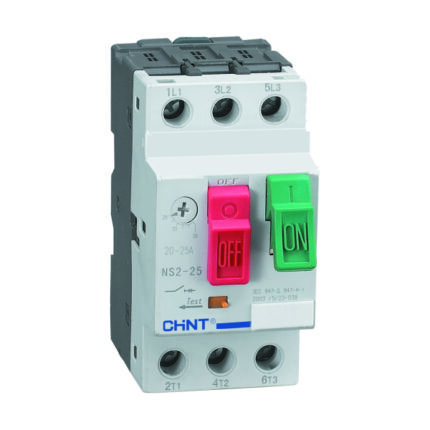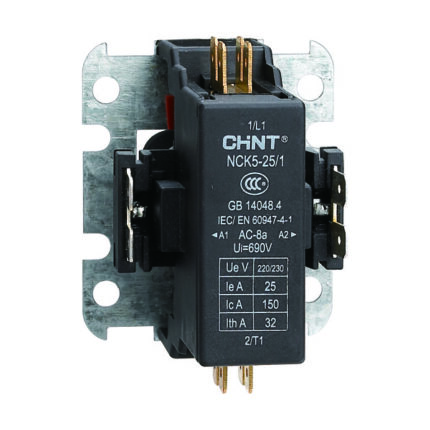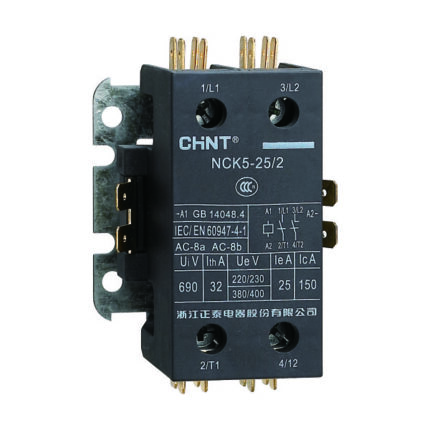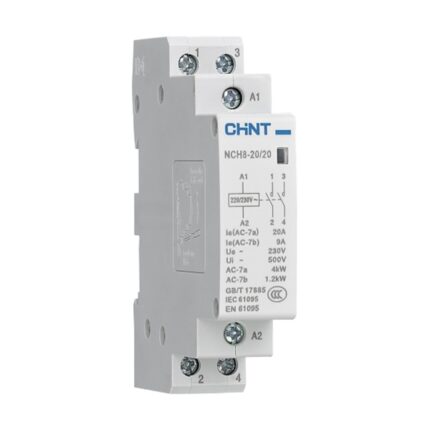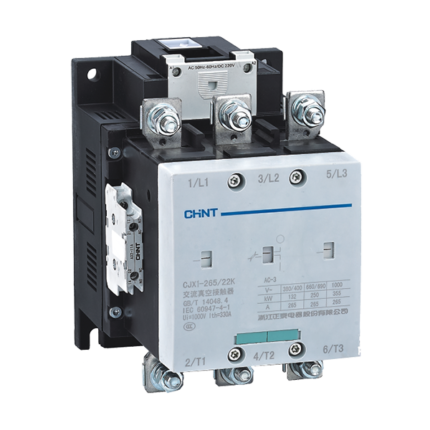
Chint original NCK3 Contactor NCK3-20/2 NCK3-25/2 NCK3-30/2 NCK3-32/2 NCK3-40/2 NCK3-20 NCK3-40 Definite Purpose Contactor
1.1 Application: HVACR;
1.2 Utilization category: AC-1, AC-8a;
1.3 Rated insulation voltage: 630V;
1.4 Standard: UL508


The Chint NCK3 Definite Purpose Contactor is an industrial-grade AC contactor designed for motor control centers, industrial machinery, pumps, compressors, conveyors, and automation systems. With current ratings from 0.1A - 630A and 3P / 4P pole configuration.
| Model Series | NCK3 |
| Rated Current (AC3) | 0.1A - 630A |
| Pole Configuration | 3P / 4P |
| Coil Voltage | 220V/380V AC/DC |
| Utilization Category | AC-3 (Motor Control) / AC-1 (Resistive) |
| Standard | IEC 60947-4-1 |
Q: How do I select the right contactor size for my motor?
A: The contactor should be rated for at least the motor's full load current (FLC). For AC-3 duty, use the motor's rated current. For heavy start applications, consider the next size up.
Q: Do I need an overload relay with this contactor?
A: Yes, a contactor provides switching control but does NOT protect against motor overload. You need a thermal overload relay (such as Chint NR2/NXR series) mounted directly below the contactor.
Chint original NCK3 Contactor NCK3-20/2 NCK3-25/2 NCK3-30/2 NCK3-32/2 NCK3-40/2 NCK3-20 NCK3-40 Definite Purpose Contactor
1.1 Application: HVACR;
1.2 Utilization category: AC-1, AC-8a;
1.3 Rated insulation voltage: 630V;
1.4 Standard: UL508


| Weight | 2 kg |
|---|---|
| Dimensions | 25 × 25 × 25 cm |
| Poles |
1P, 2P, 3P |
| Rated Current (AC-3) |
20A, 25A, 30A, 32A, 40A, 50A, 60A, 75A, 90A |
| Coil Voltage |
AC 380V, AC 240v, AC 230v, AC 220v, AC 120v, AC 110v, AC 24v, AC 440v |
Download official engineering datasheets, certified test standards (IEC / UL / CE), wiring diagrams, and dimensional drawings for Chint NCK3 Definite Purpose Contactor.
Pure engineering specifications, tripping curve parameters, and electrical selection guidance for panel builders and system designers.
AC-3 rating applies to standard squirrel-cage motor starting and stopping during normal run (starting current 5–7x In). For non-inductive or purely resistive heating loads, use the higher AC-1 rating. For severe inching, jogging, and plugging applications (AC-4 duty), derate the contactor or upsize by 1 to 2 frame sizes to prevent contact erosion.
Standard AC coils include 24V, 48V, 110V, 220V/230V, 380V at 50/60Hz. For DC control loops or PLC outputs, specify DC coils or electronic wide-range AC/DC coils (e.g. 100V–250V AC/DC) which feature built-in surge suppression, low holding power consumption, and immunity to voltage dips.
Select a thermal overload relay whose current setting range straddles the motor full-load current (FLA). Set the dial precisely to 1.0x motor nameplate FLA. For IEC 60947-4-1 Type 2 coordination, pair the contactor and relay with backed-up upstream fuses or fast-acting MCB/MCCB to prevent welding under fault conditions.
Units feature built-in 1NO or 1NC auxiliary contacts, expandable with top-mounted 2-pole or 4-pole auxiliary contact blocks (F4 / AX) and pneumatic timer delay blocks. For forward/reverse motor starters or star-delta starter assemblies, add side-mounted mechanical interlock units (MI) with electrical interlocking.
Standard ratings are calibrated for -5°C to +40°C. For ambient temperatures exceeding 55°C or altitudes above 2000m (where reduced air density diminishes heat dissipation and dielectric insulation), derate operational current by 2% per 100m above 2000m and verify insulation voltage limits per IEC standards.
Sending...