




Electric vehicle (EV) charging infrastructure represents one of the fastest-growing segments in the electrical industry. At the heart of every charging station—whether a residential Level 2 unit or a commercial DC fast charger—contactors perform the critical function of safely connecting and disconnecting high-power circuits.
Understanding contactor selection and application in EV charging systems is essential for engineers designing charging infrastructure, contractors installing equipment, and facility managers maintaining these systems.
Why Contactors Are Essential in EV Charging
The Core Functions
Contactors in EV charging stations serve three primary purposes:
1. Power Connection Control
- Connect vehicle to power source when charging session starts
- Disconnect when charging completes or fault occurs
- Enable pre-charge circuits to limit inrush current
2. Safety Isolation
- Provide galvanic isolation between grid and vehicle
- Enable emergency shutdown capabilities
- Support failsafe designs (normally open configuration)
3. Circuit Protection Coordination
- Work with protection relays to clear faults
- Support arc-flash mitigation strategies
- Enable maintenance isolation procedures
Contactor Applications by Charger Type
Level 1 Charging (120V AC, 12-16A)
Typical Application: Residential trickle charging
Contactor Requirements:
- Voltage: 250V AC rating
- Current: 20-30A rating
- Poles: 2-pole (L1, L2/N)
- Type: Standard AC contactor
Example Product: LC1D18 18A AC contactor with 120V coil
Level 2 Charging (240V AC, 32-80A)
Typical Application: Residential garages, workplace charging, public Level 2 stations
Contactor Requirements:
- Voltage: 400-690V AC rating
- Current: 40-100A rating
- Poles: 2-pole or 3-pole
- Features: Auxiliary contacts for control/status
Key Considerations:
- Continuous duty rating (100% duty cycle)
- High switching frequency (multiple sessions per day)
- Coordination with EVSE control electronics
Example Configuration:
- Main power contactor: 65A, 2-pole, 240V AC coil
- Pre-charge contactor: 10A with series resistor
- Auxiliary: NO contact for “charging active” indication
DC Fast Charging (200-1000V DC, 50-350A)
Typical Application: Highway charging stations, fleet depots, commercial sites
Contactor Requirements:
- Voltage: 750V-1500V DC rating
- Current: 100-500A rating
- Type: Specialized DC contactor or vacuum contactor
- Poles: Multiple poles in series for high voltage
Critical Design Factors:
1. High Voltage DC Interruption
- DC arcs are harder to extinguish than AC
- Requires specialized arc chutes or vacuum interrupters
- Multiple contact pairs in series to distribute voltage
2. Continuous High Current
- 30-60 minute charging sessions at full rated current
- Significant heat generation
- Requires adequate spacing and ventilation
3. Frequent Cycling
- 50,000-100,000 cycle life expectancy
- Minimal contact erosion critical
- Silver-alloy or copper-tungsten contacts preferred
Example High-Power Configuration: ` DC Fast Charger (350kW, 500V, 700A) ├── Grid Input Contactor: 400A, 1000V AC ├── Rectifier Protection: 800A semiconductor fuse ├── DC Bus Contactors (2× in series): 400A, 1000V DC each ├── Pre-charge Circuit: 50A + 50Ω resistor └── Vehicle Connector Interlock: Safety-rated contactor `
Contactor Types for EV Applications
AC Contactors (Level 1 & 2)
Standard Electromagnetic Contactors:
- NewTrend LC1D Series: 9A-150A, 690V AC
- Chint NC1 Series: 9A-95A, 660V AC
- Features: Economical, proven reliability, wide availability
Application Notes:
- Suitable for AC side of onboard chargers
- Standard IEC/UL ratings acceptable
- Coil suppression (varistor or RC) recommended
DC Contactors (Fast Charging)
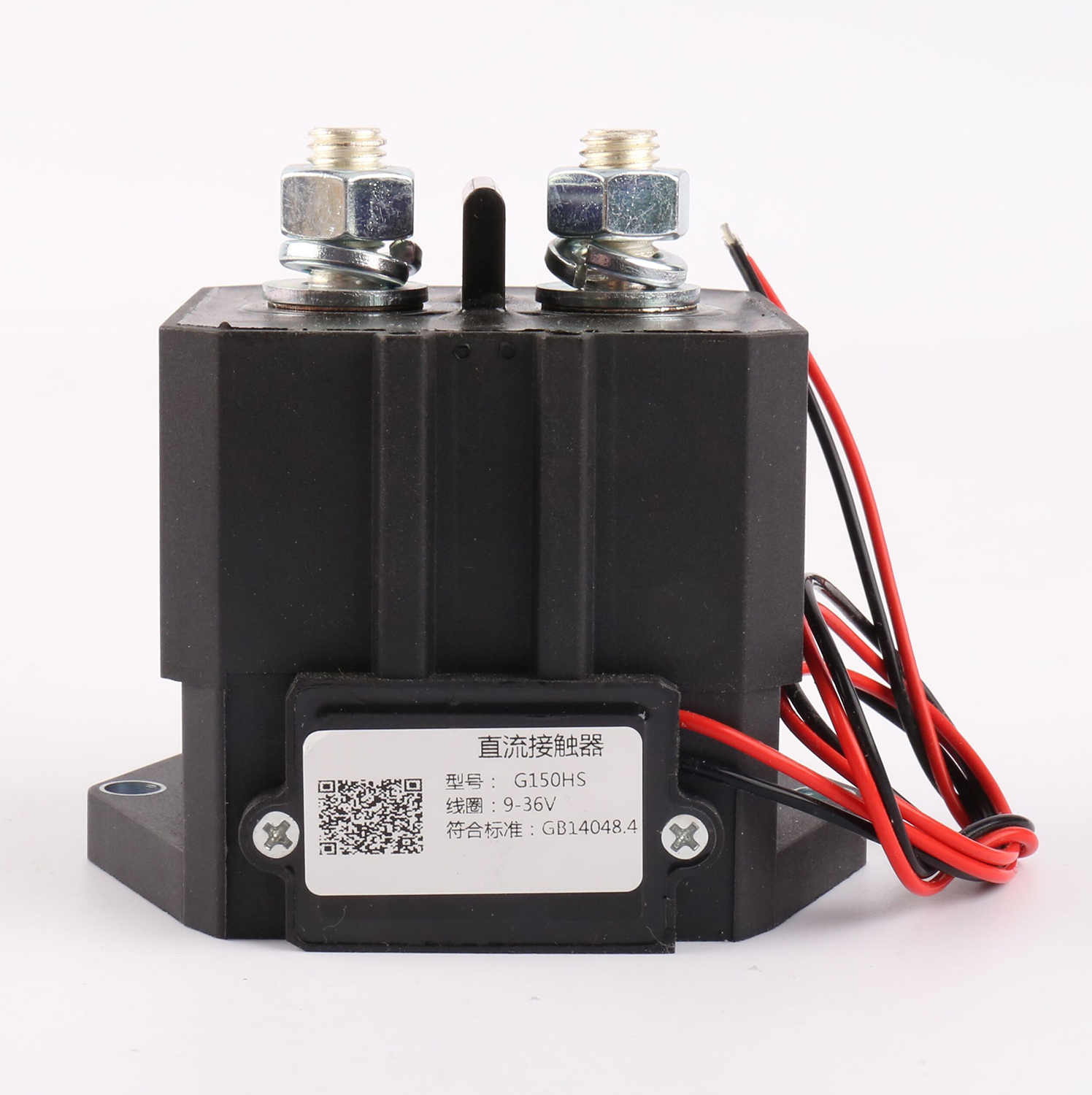
High-Voltage DC Contactors:
| Series | Current | Voltage | Features |
|---|---|---|---|
| G50H | 50A | 900V DC | Compact, sealed |
| G250HS | 250A | 1000V DC | High power, EV optimized |
| G300H | 300A | 1000V DC | Heavy-duty fast charging |
| EV200 | 500A | 900V DC | Ultra-high current |
Critical Specifications:
- Bi-directional breaking: Required for vehicle-to-grid (V2G)
- Polarity independent: Some applications require this feature
- Hermetic sealing: Protects against environmental contamination
- Magnetic blowout: Essential for DC arc extinction
Design Considerations for EV Charging Contactors
1. Switching Frequency and Duty Cycle
Standard AC Contactors:
- Designed for occasional switching (10-100 cycles/day)
- EV charging: 10-50 cycles/day typical
- Well within standard ratings
DC Fast Charging Contactors:
- High-frequency switching during charge session
- PWM-style control in some designs
- Specify contactors rated for frequent operation
2. Environmental Conditions
Outdoor Installation Requirements:
| Factor | Requirement |
|---|---|
| Temperature | -40°C to +85°C operating |
| Humidity | 0-95% RH non-condensing |
| IP Rating | IP54 minimum, IP65 preferred |
| UV Resistance | Required for plastic components |
| Vibration | 5G per IEC 60068-2-6 |
3. Safety Standards and Certifications
Essential Standards:
- IEC 61851: EV conductive charging systems
- UL 2594: EV supply equipment
- IEC 60947-4-1: Contactors and motor starters
- SAE J1772: EV charging connector standard
Certification Bodies:
- UL Listed (North America)
- CE Marking (Europe)
- CCC (China)
- ETL/CSA (Alternative to UL)
4. Control Circuit Integration
Modern EVSE Requirements:
Coil Voltage Options:
- 12V DC (common in automotive-derived designs)
- 24V DC (industrial control standard)
- 48V DC (telecom/renewable energy standard)
Control Features:
- Coil economy circuits (reduce holding power)
- Electronic coil drives (silent operation)
- Status feedback via auxiliary contacts
- Integration with charging controllers (OCPP protocol)
Pre-Charge Circuit Design
Why Pre-Charge Matters
Connecting a discharged DC bus to a charged vehicle battery creates massive inrush current (thousands of amps) that can:
- Weld contactor contacts
- Damage vehicle battery management system
- Trip upstream protection
- Reduce contactor life to <100 cycles
Pre-Charge Circuit Operation
Step 1: Pre-Charge Phase
- Small pre-charge contactor closes (with series resistor)
- DC bus charges through resistor (typically 50-200Ω)
- Current limited to <10A
- Duration: 2-5 seconds
Step 2: Main Connection
- Main contactor closes once voltage differential <10%
- Pre-charge contactor opens
- Normal charging begins
Step 3: Disconnection
- Main contactor opens when charging completes
- Pre-charge resistor dissipates residual energy
Pre-Charge Contactor Selection
| Parameter | Specification |
|---|---|
| Current Rating | 10-25A (resistor-limited) |
| Voltage Rating | Match main bus voltage |
| Duty Cycle | Infrequent (1× per session) |
| Special Features | Economizer coil preferred |
Maintenance and Troubleshooting
Periodic Inspection Checklist
Monthly:
- Visual inspection for arcing marks
- Check terminal tightness
- Verify proper mounting (no looseness)
Annually:
- Contact resistance testing
- Coil resistance measurement
- Insulation resistance test
- Operating time verification
Common Failures and Solutions
| Symptom | Cause | Solution |
|---|---|---|
| Contactor won’t close | Low coil voltage | Check control transformer sizing |
| Excessive contact erosion | Pre-charge failure | Verify pre-charge circuit operation |
| Coil burnout | Continuous undervoltage | Check for voltage drop during startup |
| Welded contacts | Short circuit or overload | Check protection coordination |
Future Trends in EV Charging Contactors
Solid-State Contactors (SSCs)
Advantages:
- No moving parts (unlimited cycle life)
- Silent operation
- Microsecond switching
- Built-in current sensing
Current Limitations:
- Higher cost (3-5× electromechanical)
- Heat dissipation challenges
- Limited to lower currents (<100A typical)
Timeline: Increasing adoption for pre-charge and pilot circuits by 2027-2028
Smart Contactors with IoT Integration
Emerging Features:
- Real-time contact wear monitoring
- Predictive maintenance alerts
- Remote diagnostic capability
- Integration with energy management systems
Product Recommendations by Application
Residential Level 2 (32-48A)
NewTrend LC1D40 or LC1D50
- 40-50A AC rating
- 240V coil (or 24V DC with separate supply)
- Built-in auxiliary contacts
- Cost-effective and readily available
Commercial Level 2 (64-80A)
Chint NC1-65 or NC1-80
- 65-80A AC rating
- 400V AC rating
- Extended electrical life
- Suitable for high-duty cycle
DC Fast Charging (100-500A)
G Series High-Voltage DC Contactors
- G50H (50A), G250HS (250A), G300H (300A)
- 900-1000V DC rating
- Hermetically sealed
- Bi-directional switching
- 50,000+ cycle life
Related products on our website
If you want to compare similar options or move from article reading to product review, start with these links:
Conclusion
Contactors are critical safety and control components in EV charging infrastructure. Proper selection requires understanding the specific requirements of each charging level, from residential AC charging to high-power DC fast charging.
As EV adoption accelerates globally, demand for reliable, high-performance contactors will continue growing. Engineers and contractors who understand these applications will be well-positioned to support the electrification of transportation.
Ready to specify contactors for your EV charging project? Our application engineers can assist with product selection, circuit design review, and compliance verification.
[Download EV Charging Contactor Selection Guide →] | [Request Technical Consultation →]