




In low-voltage distribution projects, buyers rarely compare CHINT NM1 and ABB Tmax T1 just for theory. The real comparison usually happens in quotations, panel design decisions and project budget meetings. One side is often tied to brand expectation; the other is tied to cost-performance and supply flexibility. That is why this comparison matters commercially.
For many project suppliers, the main question is simple: when is CHINT NM1 the more practical choice? The answer depends on project positioning, repeat order logic and how much brand specification pressure exists on the job.
Why buyers compare these two breaker families
Both CHINT NM1 and ABB Tmax T1 are used in low-voltage distribution work, but buyers usually evaluate them through a broader sourcing lens:
- project budget pressure
- distribution panel integration
- delivery stability
- repeat purchasing convenience
- commercial flexibility for bids and quotations
That makes this a strong comparison topic for distributors, contractors and panel builders.
When CHINT NM1 is the stronger option
CHINT NM1 is especially attractive where buyers need a solid industrial breaker with better cost control across repeated or medium-scale projects. In these cases, the objective is not just technical compliance. It is also about building a competitive supply chain.
Typical fit scenarios include:
- industrial distribution cabinets
- commercial building switchboards
- OEM equipment panels
- general project supply for contractors and distributors
When ABB Tmax T1 is still considered
ABB Tmax T1 is more likely to remain in place when the project is written around ABB-approved vendor lists or when the customer insists on ABB continuity for legacy systems. In that case, brand alignment becomes part of the technical requirement.
But outside those brand-locked situations, CHINT NM1 often gives buyers a more practical commercial path.
Project-side comparison table
| Comparison point | CHINT NM1 | ABB Tmax T1 |
|---|---|---|
| Typical buyer focus | Cost-performance and sourcing flexibility | Brand specification and legacy continuity |
| Project fit | Broad industrial and commercial distribution work | Brand-sensitive or designated projects |
| Commercial advantage | Useful for repeat purchasing and quotation competitiveness | Useful where ABB approval is mandatory |
| Distributor value | Stronger flexibility for project bidding | Better where customer explicitly requests ABB |
Recommended CHINT NM1 products on our site
For this article, we should not leave the comparison at a conceptual level. We should point buyers directly to actual CHINT NM1 products they can review:
| Product | Main positioning | Key parameters | Link |
|---|---|---|---|
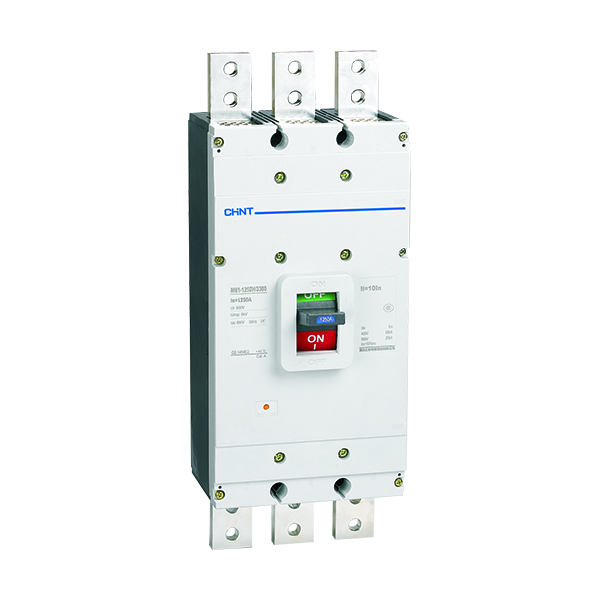
| CHINT NM1 Series Moulded Case Circuit Breaker MCCB | General industrial and commercial distribution | Model: NM1; Frequency: 50/60Hz; Breaking capacity: 20kA–100kA; Rated voltage: 690V; Type: MCCB | View product |
| CHINT NM1 3-Pole MCCB Circuit Breaker 125A-1250A | Panel builders and higher-current distribution projects | Product range: 125A–1250A; Poles: 3P; Use: distribution and protection | View product |
| CHINT NM1-250S to NM1-630S 3P/4P Moulded Case Breaker | Distribution cabinets with common 3P/4P requirements | Range: NM1-250S to NM1-630S; Poles: 3P/4P; Application: industrial distribution | View product |
Why this article works better than a generic guide
A good industrial article should sound like it came from someone who understands project purchasing, not from a template engine. Real buyers compare CHINT and ABB because they are balancing specification pressure against margin pressure. That is the real conversation happening behind procurement decisions.
By framing the article this way, we are no longer just publishing “content.” We are building a better entry point for serious distribution inquiries.
Final takeaway
CHINT NM1 is worth emphasizing because it matches how many industrial projects are actually sourced: practical performance, broader commercial flexibility and repeatable supply logic. For our site, CHINT comparison content is much more valuable than repeating generic model-selection posts.